Industry Insights
On-Premises AI vs Cloud AI: Which Workloads Should Stay Under Your Control?
A practical framework for deciding which AI workloads belong on your own infrastructure and which can safely run in the cloud.
Nova Zeraati · 2026-08-05 · 4 min read
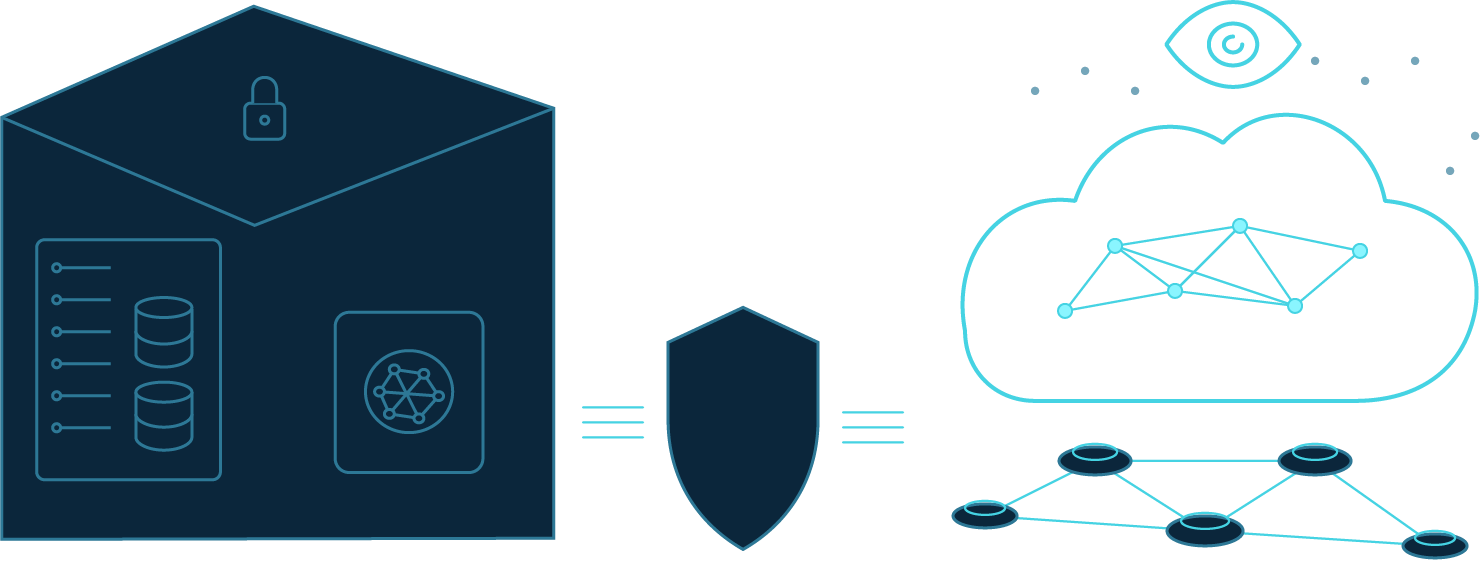
Artificial intelligence can run in the cloud, on infrastructure controlled by your organization, or across both.
Cloud AI uses infrastructure managed by an external provider. On-premises AI runs inside your own servers, data centre, private cloud, edge systems, or air-gapped environment.
The real question is not which model is universally better.
Which AI workloads are too sensitive, important, or operationally critical to place entirely in someone else’s infrastructure?
Why organizations choose on-premises AI
On-premises AI gives organizations direct control over where data is processed, which models are used, who can access the system, and how AI activity is governed.
It is often the stronger choice when an organization needs:
- Sensitive or regulated data to remain inside its environment
- AI systems that continue working without reliable internet access
- Stable model versions and controlled updates
- Predictable performance and operating costs
- Detailed access controls, audit logs, and approval workflows
- Independence from external provider outages, pricing changes, and service restrictions
This is especially relevant for legal, healthcare, financial, government, industrial, research, energy, and remote operations.
Privacy is about control, not location alone
Running AI locally does not automatically make it secure. The infrastructure still needs proper access controls, monitoring, backups, maintenance, and security policies.
The difference is that the organization can define and enforce those controls directly.
With on-premises AI, confidential documents, client records, internal communications, and proprietary knowledge can remain inside the organization’s infrastructure rather than being sent to an external AI provider.
Cloud services may still be appropriate for lower-risk workloads when the provider’s privacy, security, and contractual protections are acceptable.
More than a local model
On-premises AI does not have to mean running a small model on one computer.
A modern private AI platform can support:
- Private AI chat
- Search and answers across internal documents
- Governed AI agents
- Email intelligence
- Multiple approved models
- Role-based access
- Audit and compliance logs
- Monitoring, backups, and recovery
- Remote and air-gapped deployments
- Integrations with internal systems
The goal is not simply to host a model. It is to create a controlled AI environment that can support real organizational work.
Cost and long-term use
Cloud AI often uses subscriptions, API fees, storage charges, and usage-based pricing. This can be practical for low-volume workloads.
However, costs can rise as more employees, documents, models, and automated workflows are added.
On-premises AI usually requires an initial investment in infrastructure and deployment, but it can provide more predictable long-term costs for organizations with steady or high usage.
The right comparison is total cost of ownership, not just the starting price.
Reliability and offline operation
Cloud AI depends on internet connectivity, provider availability, account access, service limits, and model availability.
On-premises AI can continue operating during internet outages when the local infrastructure remains available. This is valuable for remote sites, industrial facilities, mobile operations, secure networks, and other environments where connectivity cannot be guaranteed.
As AI becomes part of essential daily work, operational independence becomes more important.
When cloud AI may be appropriate
Cloud AI may be appropriate when:
- Demand may increase quickly and elastic capacity is important
- The data is not highly sensitive or is covered by an acceptable privacy agreement
- The organization wants to avoid purchasing and maintaining dedicated AI hardware
- The workload does not require offline operation
- Dependence on an external provider is acceptable
An organization may also use cloud AI for public or low-risk information while keeping confidential knowledge and sensitive workflows inside private infrastructure.
A simple decision framework
| Choose on-premises AI when | Cloud AI may be appropriate when |
|---|---|
| Sensitive data must remain under direct control | The data is low-risk |
| Offline or disconnected operation is required | Reliable internet is always available |
| Model stability and governance matter | Provider-controlled updates are acceptable |
| Usage is high and predictable | Elastic demand is the main concern |
| AI supports essential operations | External dependency is acceptable |
| Auditability and access control are required | Provider controls are sufficient |
Hybrid AI can provide both
A hybrid architecture allows organizations to keep sensitive and operationally important workloads on-premises while using cloud services selectively for approved, lower-risk tasks.
This approach works best when routing rules are clear:
- Which data may leave the organization
- Which tasks must remain local
- Which users can access cloud services
- How requests are logged and reviewed
- What happens when external services are unavailable
Conclusion
Cloud AI can be useful for workloads involving low-risk data, elastic demand, and situations where dedicated infrastructure is not preferred.
But when AI works with confidential information, internal knowledge, automated workflows, or essential operations, organizations need more than convenience.
They need control over their data, models, infrastructure, access, costs, and continuity.
That is where on-premises AI becomes the stronger foundation.